Tuesday, December 22, 2009

Taddle Creek

Christmas 2009

This is my first regular issue of Taddle Creek (my previous experience being limited to the comics issue), and I'm pleased with it. I've been feeling the need to be more connected with the city, in terms of the arts that it produces, and this periodical scratches that itch quite nicely (one of the stories is set blocks from where I grew up).

What I liked about this issue:

Why, Zanta?... Why?... is a wonderful comic treatment of Zanta, the notorious Toronto character, known for doing push-ups on the streets of Toronto wearing shorts and a Santa hat. It's done by Jason Kieffer, whose book on local street people will be the subject of a posting in another week or so.

Terry Murray has a nice piece about Merle Foster, the Toronto sculptress and philanthropist.

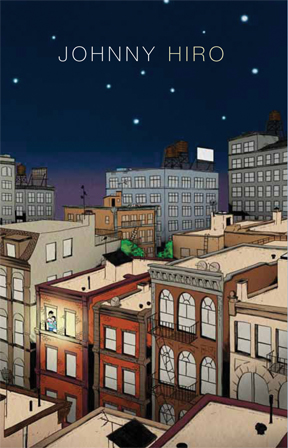
There is a collection of four of Michael Cho's alley scenes. I bought two of these prints at the first TCAF I attended, and it's really nice to see more of these being displayed. They are wonderful pieces of art.

Nathaniel G. Moore has a couple of excerpts from his new work Savage. These pieces about a boy growing up in North Leaside were like a direct injection of nostalgia. I will definitely keep an eye out for the finished product.

The other stories in this issue, by Heather Hogan, Cary Fagan, and Stacey May Fowles were also all decent efforts.

In all, a very good magazine, well worth picking up.

Strange Journeys Volume One

by CunninLynguists

I've both admired and been frustrated by the CunninLynguists since I picked up their brilliant third album, 'A Piece of Strange'.

I love the way they combine Kno's layered and textured beats with Deacon's deep voice. When they write serious songs, they are among the best in the game.

What frustrates me (or, depending on who's in the car, embarrasses me) is their penchant for low-brow humour. I guess anyone that sees the group's name would expect some juvenile antics, but I find too often, they move to the lowest denominator.

This album/mix-tape tries to balance both sides of the group. Kno provides all of the beats, and they are gorgeous. They thoughtfully included the instrumentals to all of the new compositions here, and some of those are more likely to make it onto my ipod than the vocal tracks. Kno is one of the best producers in the industry, and he deserves a lot more attention than he gets.

Perhaps part of the problem is that the Lynguists (and friends - there are a lot of guests on this album) take a beautiful beat (like on 'Nothing But Strangeness') and sing about a girl who defecates so hard she breaks a toilet. 'Never Come Down (The Brownie Song)' is another example of a lovely track sullied by low intentions.

Once you edit through the toilet and drug humour, there are a lot of fantastic tracks on here. Former Lynguist Mr. SOS gives us 'Die For You', which works nicely with Tonedeff's 'The Distance'. From the Lynguists themselves, stand-outs include 'Don't Leave (When the Winter Comes)', which features Slug, and 'Broken Van (Thinking of You)' featuring Mac Lethal. Also notable are the remixes from Dirty Acres: 'Georgia', featuring Killer Mike and Khujo Goodie; and 'KKKY' featuring some of the Nappy Roots.

Apparently volume two is out - I'll have to look for that.

Hell's Angels

by Hunter Thompson

Thompson really is one of the great American writers of the 20th century. This was his first published book, and it's very easy to see, when reading it, how hard he struggled to produce a 'straight' piece of reportage, instead of giving in to whatever whims and authorial flourishes caught his fancy.

This book, published in 1967, claims to offer a truthful examination of the Hell's Angels, the notorious motorcycle club that captivated the American media in the early 60s. These larger-than-life outlaws were constantly being written about in the paper, when Thompson, a resident of San Francisco, decided to befriend them and write about them from an 'insider's' perspective.

That's basically what this book is - an account of his time drinking, driving, and hanging out with the Angels. He ingratiated himself to Sonny Barger, the club's founder, and so was allowed to witness their events and everyday activities with a great amount of access and freedom, at least until September of 1966.

His book delights, as did the Angels, of the misrepresentations of the outlaws perpetrated by the mainstream media, although with so much bullshit flying around, it is naive to think that this book didn't get splattered a little as well. Thompson revels in the outsider status of the bikers, glorifying it, and, at times, making use of it, such as when he felt the need to scare off his landlords, with humourous results.

Thompson's book goes much further than simply describing and analyzing the Angels though. This book does as much to construct the mainstream's perception of the Angels as does explain it. As well, Thompson writes about America just as it was on the cusp of a massive generational shift. Later, the Angels hang out with Ken Kesey at La Honda, yet, when they bust up an anti-Vietnam protest later, they demonstrate to what degree they were a part of the previous generation, with its values.

The book was written before the events of Altamont, and so Thompson is permitted to portray the Angels as wildly eccentric outlaws in the American tradition. Things obviously changed as their membership grew, and they became more involved in the drug trade.

Thompson's writing begins to betray the journalistic flourishes and speculative excesses for which he became so well-loved. This work is at once reverential, exacting, and insightful, and should be seen as a forerunner of books like Tom Wolfe's 'The Electric Kool-Aid Acid Test'.

My Pain is Worse Than Your Pain

by TC Boyle

While I've always enjoyed his novels, Boyle is a master of short fiction. He conjures up, with great sparsity, complete and believable narratives.

In this story, some guy living in a mountain side community of 'cabin'-dwellers, falls for the recently widowed neighbour - quite literally as he plunges off her roof into some rocks on an ill-advised nighttime peeping tom mission. He loses his wife in the outcome, as well as the respect and company of his community.

Boyle touches on themes of isolation and pain, as the narrator keeps repeating the same mistakes, and injuring himself in a way that mirrors the demise of the husband of the object of his affections. This is some good stuff.

Johnny Hiro

by Fred Chao

I read the first three stories in this collection in their original, single issue format, and was instantly drawn to Fred Chao's charming characters. When I saw that the collected edition had two new stories, as well as some 'deleted scene' style single page stories, I knew I had to pick it up.

Johnny Hiro is 'half-Asian, all hero'. He's an early 20s busboy at a sushi restaurant who lives in New York with his wonderful girlfriend Mayumi. Stuff happens to him. In the first issue, Gozadilla (a Godzilla stand-in) kidnaps Mayumi out of their bed in a bizarre plan for revenge. In the second, Hiro (no one except his parents call him John or Johnny) has to steal a lobster from another sushi restaurant, and is pursued by knife-wielding kitchen staff. The third involves 47 ronin accountants and the Metropolitan Opera. The fourth involves another sea-food related chase across the city.

The final story, which I guess would have been the fifth issue, features the cast of Night Court (with Judge Judy acting as a stand in for Harry) dealing with Hiro's legal troubles, which stem from the damage done to their apartment by Gozadilla.

Chao's stories are whimsical and often sentimental. His humour is easily enjoyed, and the reader begins to really like Hiro and Mayumi. At the core of this book, it is about a young couple struggling to make ends meet in New York. The giant lizards and other strange threats are incidental to the story of their love for each other. At times, Chao's writing may get a little too sentimental, but he clearly loves his characters.

Also of interest in this book is the way in which it is very much a product of New York. The city is as central to the story as it is in a Brian Wood comic. Mayor Bloomberg makes a couple of appearances, and hints at his third term plans (this comic came out before the election). Also on hand, in addition to Judge Judy and the Night Court crew, are Gwen Stefani, David Byrne, Grand Puba, and Coolio.

Chao's artwork is clean and straight-forward, sometimes showing manga influences. The book is a great read, and easily one of the best of 2009.

Longbox Digging: Wildcats Version 3.0 Vol. 2: Full Disclosure

Written by Joe Casey
Art by Dustin Nguyen and Richard Friend


So, having finally read most of the earlier parts of Casey's run on Wildcats, I figured it was a good time to re-read Volume 2, and then move on to the single issues that were never collected in trade. It turns out I'm missing a few, so now I know what I'll be hunting for come Boxing Day...

In this volume, Casey almost completely abandons the trappings of a superhero comic, choosing instead to focus on the corporate aspects of life at Halo. There is the lengthy scene wherein Dolby, the accountant, is trained to replace Grifter, who was crippled in volume one, but his mission feels tangential - there is never even any follow-up with the child that he 'rescued' from the FBI.

The rest of the book is all about Spartan's machinations in the business world. Sure, that still involves accounting firms that are fronts for the CIA, but it is just as much about hostile takeovers of major media corporations. What makes this book so great is that the corporate stuff is just as exciting and well-drawn as the few action scenes.

Casey was really on to something with this book. I'm looking forward to re-reading (or reading for the first time) the rest of the series.

Monday, December 21, 2009

All That

by David Foster Wallace

This short piece of fiction reminds us of what we lost when David Foster Wallace died last year. This story (not that it is really shaped like a story) deals with the perceptions of childhood - how children believe what their parents tell them unconditionally, and how they accept uncommon events as commonplace, such as the voices that the narrator heard until adolescence.

This feels very autobiographical - the sensitive, delicate boy who believes that his wooden cement mixer pull-toy is magical, so long as he doesn't look at it and who enters into fits of ecstasy because of late afternoon sunlight, only to have them heightened by his mothers sarcasm reads more like a reminiscence than a work of creation.

Wallace's authorial voice is more controlled than usual here. Yes, his sentences are gloriously overlong and peppered with parenthesis, but there is not a single footnote in sight, and he mostly keeps to his narrative. Any digressions feel intended, which is not always the case with his work, I've always suspected.

If anything, this reminds me that I've never read Infinite Jest or any of his other books, having only encountered his work through his magazine fiction. I should get on that...

Saturday, December 19, 2009

Crate Digging: My Last and Best Album

by Braintax

The title of this album pretty much sums things up: Braintax's last album is his best. It is a remarkably consistent album, even while Braintax makes use of a wide range of beats.

On this disk, he again refuses to shy away from uncomfortable topics, focusing his indignation on Israel ("I hate Israel but I don't hate Israelis" is a lyric that should speak to many people around the world), the media, consumerism, urbanism, and once again, British culture.

The back cover provides us with handy descriptions of each track, such as 'uptempo fidgety tea break', 'uptempo dusty shizz', and 'epic head-nod eco drama'. It's unfortunate that Braintax has chosen to retire from the music industry, but it's hip-hop - there's always hope for a comeback.

False Hopes XIV

by Sims

Sims comes off as the most optimistic and happy of the Doomtree crew. I don't mean to imply that the rest of them make music that is dark or cynical; it's just that he seems to project a more upbeat persona through his music. He doesn't appear to have the angry ambition of POS and Mictlan, nor seem as soul-searchingly poetic as Cecil Otter. He also lacks the mercurial nature of Dessa.

Basically, he's the one that can turn out a pile of tracks that are technically skilled, intelligent, and uplifting, which basically describes this installment in the False Hopes series.

Beats are provided by Doomtree regulars Lazerbeak, MK Larada, Paper Tiger, and POS, although there are also tracks produced by Medium Zach and Noam the Drummer. The only guest on this short ep is Omaur Bliss.

Days Missing #5

Written by Phil Hester
Art by Frazer Irving


This has been an interesting series, a key attraction of which has been the rotating creative teams. Wisely, the final issue of the first volume ends as it began, with work by Hester and Irving, the most accomplished of the creators of this comic.

The Steward has been attempting to fix a huge issue - the sudden appearance of a sentient nanite colony which threatens to destroy the Earth in the usual 'gray goo' scenario. Each time he folds a day, erasing it from history, he fails at his mission. This issue chronicles his ninth attempt, and how he deals with "a nuclear weapon having an acute existential crisis". That Hester takes a more philosophical than action-based approach to this story is what makes the book interesting, as does the revelation of the ending, which I imagine opens the door to a possible Volume 2 (which will hopefully not have Dale Keown on covers).

Hester and Irving turn in some great work here, although I'd still prefer to see them working on Firebreather and Gutsville (respectively).

Forgetless #1

Written by Nick Spencer
Art by Scott Forbes and Marley Zarcone


Forgetless appears to have been influenced by elements of Phonogram, Local, and Final Crisis Aftermath: Dance. That's a pretty eclectic mix of comics, but it works here.

Forgetless is some kind of club night/event in New York City, and the Forgetless event in question is the last one (although people have heard that before). The comic is split between two stories, with vastly different subject matters and art styles, although both are concerned with people going to Forgetless.

The first story, drawn by Forbes (in a style that is equal parts Luna Brothers and Waltz With Bashir), concerns two smart-assed models, who post endlessly on Twitter, and who moonlight as assassins. This is the first contract for one of the girls, whose prey is planning on attending Forgetless. Therefore, they go too. There's also a guy in a koala suit.

The second story, drawn by Zarcone, is about a trio of teens living somewhere in Jersey, who are desperate to escape to New York in general, and desperate to attend the final Forgetless in particular. The only problem is that they are under-age, and under-funded. Zarcone's art reminds me a little of Cloonan and Lolos, and chronicles the kids as they go about attempting to purchase fake ID.

I'm not sure if each issue of this mini-series will be divided into these two stories, or if other tales will also be told, but I'm definitely intrigued enough to stick around for the rest of the run, and recommend this to anyone looking for something a little different.

Hellblazer #262

Written by Peter Milligan
Art by Giuseppe Camuncoli and Stefano Landini


Milligan's 'Constantine in India' storyline continues to please, as John faces off against a demon from colonial times, meets up with an old mage in a loincloth, and scares his white guru friend. Milligan has managed to introduce a number of new characters over the last couple of issues, my favourite being the two Indian cops that tail John, thinking that the serial killer they were denying the existence of last issue, might be advantageously white.

I feel like Milligan's put himself on very familiar ground, and he's able to use that as a definite strength in this story. As always, Camuncoli and Landini are turning in good, solid work as well.

The Last Resort #5

Written by Jimmy Palmiotti and Justin Gray
Art by Giancarlo Caracuzzo


Palmiotti and Gray finish off their sexy tropical vacation zombie comedy series the only way such things can finish, with a lot of bloodshed, explosions, the odd decapitation, and less nudity than any other issue of this series so far.

This has been a fun romp through disaster and zombie movie clichés that has elevated itself through strong characterization and a depraved sense of humor. Caracuzzo's art has been sketchy in places, but has held up quite well over the course of the series. Darwyn Cooke's covers have thematically fit quite well, even though they don't really echo the style of the comic.

I figure this is one mini-series that will read really well when published in trade. Recommended.

Fables #91

Written by Bill Willingham
Art by Mark Buckingham, Steve Leialoha, and Dan Green


This book has been on fire again lately. The 'Witches' arc has been all about power plays among the more magical Fables, and in this issue, Geppetto makes his move for power, claiming that he should be in charge not just of the 'fifth floor', but of all of the Fables. This causes Ozma to up her game even more. Meanwhile, Rose Red is still getting visits from pig heads.

While all of this is happening, Blufkin makes his big move on Baba Yaga, showing that he is indeed a powerful flying monkey.

Absent from this book are Bigby and Snow, which seems a little odd. There is too much going on for them to not be getting some stage time. Other than that, this was a fantastic issue. The appearance of a character not seen in some time at the very end makes me look forward to the next issue.

Underground #4

Written by Jeff Parker
Art by Steve Lieber


Parker's Underground continues to be a very exciting and rewarding title. His story of park rangers being chased through a massive cave by employees of a local businessman who wants to open the cave for tourism deftly balances strong characterization, ecological sensibilities, and a suspenseful rhythm.

Lieber's work is great throughout. As Wes and Seth have to travel through deep water, with only a narrow pocket of air along the roof of the cave available for breathing, his art becomes very claustrophobic, helping the reader feel the tension of the moment.

Ron Chan's colours work exceptionally well - the underground scenes are monochromatic, but the establishing shots and scenes involving the people outside the cave are so brightly coloured that the reader feels as if he has just come out of a dark cave himself.