Showing posts with label Poetry. Show all posts

Monday, January 2, 2012

Harlem in Vogue

The Poetry & Jazz of Langston Hughes

I've been reading Langston Hughes pretty much my whole life.  He's one of the essential poets, and his work is easy to understand when introducing poetry to young people.  I've only rarely been blown away by anything he's written, but I do have a tremendous amount of respect for his place in the American canon, especially his place in the history of African-American literature.


Harlem in Vogueis a collection of recordings that Hughes made in the late 50s.  There are 29 tracks on this disc, divided into four sessions.

The first ten tracks were done with Leonard Feather's All-Star Sextet accompanying Hughes, playing music that attempted to match and augment the poetry.  Then there are eleven tracks where Hughes is joined by Charles Mingus and the Horace Parlan Quintet.  This part is my favourite section of the album, as Mingus understands the themes of the poems, and the music matches them perfectly. 

After that, there are six tracks that have Hughes speaking without musical accompaniment.  These are much longer selections, and most revolve around his character of Simple; most are more prose pieces than poems.  It is in this part of the disc that we get to hear two of Hughes's most famous poems: 'I have known rivers' and 'I too'. 

The disc finishes with two 'jazz interpretations' of Hughes's work by the Bob Dorough Quintet.  These are nice, except that the female vocalist is rather annoying.

In all, this CD is an important historical artifact, and gives listeners the rare chance to hear the actual voice of a poet long dead.  It feels like it's important to own an item like this, even if I find that I rarely want to sit down and listen to it.

Tuesday, March 22, 2011

The Beats: A Graphic History

Written by Harvey Pekar, Paul Buhle, and others
Art by Ed Piskor and others

Like a lot of people, I went through a pretty heavy Beat phase in my last couple of years of high school, which carried over into university.  I loved Kerouac's free-flowing and frequently annoying prose, and tried my best to get into Burroughs, although that was often pretty difficult.  I read some of the poetry, and developed a long-lasting love of Lawrence Ferlinghetti's work.  I did, however, outgrow them, and have only occasionally strayed into their territory since I turned 22.

This 'graphic history' was a nice reintroduction to some old friends.  The book mostly consists of graphic biographies of the Beats, although the further one gets into the book, the more free-flowing the comic strips are.  The first one hundred twenty pages or so are made up of biographies written by Harvey Pekar and drawn by Ed Piskor that focus on the central figures of the movement.  Jack Kerouac, Allen Ginsburg, and William S. Burroughs get lengthy entries, as befits their status as the holy trinity of beat-ness.  These parts are great, and while they didn't tell me much that I didn't already know, I appreciate the conciseness and economy of their tales.

After that, Pekar and Piskor focus on the minor beats, giving a few pages each to people like Philip Whelan, Ferlinghetti, and LeRoy Jones (Amiri Baraka).  At this point, the book is given over to a number of independent cartoonists, and becomes much more erratic in its quality.  That said, some of the best parts of this book are included at the end.

The bio of Kenneth Patchen (by Pekar and Nick Thorkelson) does a great job of infusing the text with Patchen's own poetry.  It was at this point in reading that I realised how little room was being given over in this book to examine or sample the Beats' actual writing.  This was a refreshing change.

Perhaps the best segment in this whole book though, is Joyce Brabner and Summer McClinton's 'Beatnik Chicks', an exploration of the women who were on the periphery of, yet central to, the Beat Movement.

In all, I appreciated this well-researched and well-produced book.

Friday, April 10, 2009

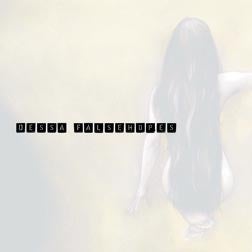
Spiral Bound & False Hopes

by Dessa
Since last summer, I have been immersing myself in music from the Doomtree crew. The appeal seems to be something much more than just the music (which I love); there is an ethos to this talented group of rappers and producers that strikes a chord with me.

Among the voices of this group, Dessa has stood out since I first heard her on the self-titled Doomtree album. As the only female in the crew, she provides a nice balance to the larger posse-cut songs, but there was something more to it that attracted me to her output. She has a lovely voice, and a remarkable range. She can spit some hard and fast lyrics, and then sing a hook with such a small, lovely voice. More than that though, her lyrics convey a strong sense of her intelligence and personal strength.

Sadly, she hasn't produced much in the way of solo work. Her one solo musical release is part of the False Hopes series of semi-mixtapes, and is only five tracks deep. Of those five tracks, only two are produced by Doomtree mainstays (Lazerbeak and Paper Tiger), although all of the songs fit comfortably within the Doomtree sound. There are appearance by Cecil Otter and Sims - two rappers whose voices always compliment Dessa's. The cd is finished in a little over 15 minutes, and therefore does little more than whet the listener's appetite for more Dessa.

So I was both pleased and intrigued to learn that Dessa had published a slim book of poetry and short memoirs. The Doomtree site claimed that due to an error in the factory, her new album came out on paper instead of a cd, which in some ways limits expectations.

Spiral Bound is a strong piece of work. I feel like I have a much stronger vision of this artist now, while she still manages to avoid revealing much that is overly personal or confessional, which I appreciate.

The poems are lovely, but it is the memoir pieces that I really found myself sinking my teeth into. Saint Maxwell is a loving four-page piece about her younger brother and mortality. Camera Obscura moves from a conversation with her father on his tiny, rocking sailboat to revelations and musings about the volume and pace of modern life.

Perhaps the best piece in this book is The Leviathan, in which Dessa discusses meeting Life while backpacking in Uruguay. The young man's name is pronounced Life (it's Leif), but, as is clear from the start, much more can be read into this chance encounter.

I would love to see more stuff from Dessa - be it longer pieces of writing or more music. She is a truly unique voice in hip-hop today, and one I look forward to charting the progress of.