Showing posts with label Afro-. Show all posts

Sunday, November 4, 2012

Solidarity

by The Souljazz Orchestra

The Souljazz Orchestra's last album, Rising Sun, was a beautiful exploration of the two schools of music that make up the group's name, with a decidedly Ethiopian influence to it.  That album was firmly instrumental, and a move away from the more Fela Kuti-inspired afrobeat of their earlier work.

Now, with Solidarity, their new album, the band has evolved once again, while staying close to their roots.  They've constructed ten wonderful tracks which range from afrobeat to Caribbean and Brazilian inspired songs.  They've also invited a number of guests to join them, encompassing a number of different traditions.

Included on this album are artists from (or with parents from) Sénégal, Brazil, Jamaica, as well as Canadians steeped in North American jazz, soul, and Quebecois music.  In many ways, this band from Ottawa has put together a multi-lingual album which reflects the diversity and beauty of Canadian society.  It's all about Solidarity.

This is a fun album to listen to.  The band has a number of crowd-pleasing tracks, full of high energy, but also some that are more introspective and beautiful.  It's good stuff.

Thursday, October 25, 2012

Antibalas

by Antibalas

Fela Kuti is alive and well, and curiously, living in Brooklyn.  That's what you might think, were you to listen to Antibalas's latest, self-titled album, without knowing what you were listening to.

The band, having made the move to Daptone Records, continue to channel the Black President in all that they do, while also modernizing his sound, and singing about contemporary issues which Fela would probably be tackling himself, were he still with us.

The album starts with 'Dirty Money', a horn-drenched commentary on our wealth-obsessed culture.  'Rat Catcher' tells a story that also sounds like one Fela would have told.  While the band is excellent and swinging, it is the presence of vocalist Abraham Amayo, who was raised in Nigeria, that elevates this music to a new level.  His lyrics and vocal mannerisms really bring all of these tracks together.  I love waiting for that point in each song (sometimes quite a ways in) where he joins the music.

I saw these guys play about a month ago, and I have to say, if you ever get the opportunity, make sure you don't miss them.  They put on an incredibly high-energy show.

Tuesday, October 16, 2012

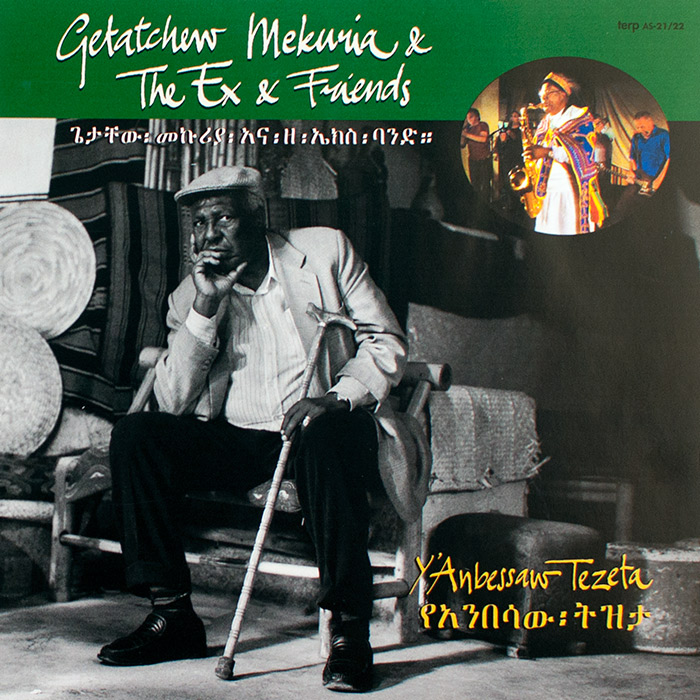
Y'Anbessaw Tezeta

by Getatchew Mekuria & The Ex & Friends

While looking for music I'd never come across before in New York this summer, at the excellent store Other Music, I was told to check out Y'anbessaw Tezeta, a two-disc collection of work by Ethiopian jazz artist Getatchew Mekuria and the Ex, an underground punk band from the Netherlands.

It sounds unlikely, but this is an amazing album.  Mekuria sets the tone, as most of the tracks are clear and triumphant ethio-jazz of the style one would expect from a Mulatu Astatke album, although there is a rawness to the album that comes across as a bit of a surprise.

Many of the songs on the first disc are traditional Ethiopian pieces that have been re-imagined for a jazz audience.  The second disc is a little more diverse, as it has some free jazz pieces, and more influence from The Ex.

I cannot recommend this album enough.

Wednesday, July 18, 2012

Live in Detroit 1986

by Fela Kuti & Egypt 80

This double-disc album contains recordings from Fela Kuti's concert at the Fox Theatre in Detroit in 1986.  Each disc in this set contains two tracks, with running times between twenty-nine and forty minutes.

Fela arrived in America after serving two years in prison in Nigeria on trumped up charges.  His release was partly due to the fact that Amnesty International took up his cause, and then brought him on tour to the US.  Her performed at the Fox with something like twenty-three people in his band, and it sounds like it was one incredible concert.

I don't know if the concert extended beyond these four songs - these alone account for almost two and a half hours worth of music - and I have to say it must have been incredible to watch the band perform these four tracks.  Fela has masterful control over his band (giving various musicians long solos) and his audience, engaging them in call-and-response while lecturing them on topics such as how African speak with 'whole mouth', and how things in Nigeria can happen 'Just Like That'.

It's hard to imagine contemporary concert goers sticking around for forty-minute tracks; I think it would be more likely to see a twenty-minute medley of snippets of each of his biggest and best-known songs, which would also be amazing to hear, but would lack some of the authenticity of these recordings.

This is an essential album for fans of Afrobeat, Fela, or just good music.

Sunday, April 22, 2012

Original Raw Soul III

You can always count on Now-Again Records to bring together a quality album.  This is a seventeen-track compilation of mostly previously released music from different groups that were led by Jay and Max Whitefield, who today usually record under the name The Whitefield Brothers.

From Now-Again's site:
Original Raw Soul III looks back at recordings dating back over twenty years but never once sounds dated or dull. There’s the garage funk of the early Poets incarnation the Bus People Express; the deep jazz of vocalist Bajka gigging with a Max Whitefield ensemble; the pan-African psych-jazz of the Whitefield Brothers. And that’s just three of the ensembles contained within. Original Raw Soul III’s sixteen tracks that span the gamut of forty years of musical innovation, recorded over the past twenty years, and presented anew today.
I find this album very enjoyable, especially any of the tracks that feature Bajka's deep, lovely voice.  If you are a fan of funk, soul, or afro-rhythms, I recommend this disc fully. I mean, who can hate on an album featuring a band called Mercy Sluts?

Saturday, March 17, 2012

Mediacracy

by JariBu Afrobeat Arkestra

We know music to be universal, so there's nothing strange about an Afrobeat band from Japan, is there?  Even when its music is released on a German record label?  The JariBu Afrobeat Arkestra is thirteen-person group (there are an additional six musicians guesting on various tracks) that could hold their own with some of the best of the groups that came out of Nigeria in the early 70s.

Listening to Mediacracy, I was reminded of Antibalas, another contemporary Afrobeat group who continue Fela Kuti's tradition of discussing politics in their music.  The title track of this album calls out the media, and their dominance of the political and social spheres for not helping anyone, and making the world a worse place.

Unlike Antibalas, the JariBu gang keep their message (and their music) much shorter, fitting eleven tracks into a one-hour recording.  This is a very cool album filled with some very nice Afro-influenced music.

Wednesday, March 14, 2012

Addis Abeba

by Imperial Tiger Orchestra

Sometimes you can judge a product by its cover.  Looking for some new music one day, this cd case caught my eye - I've been increasingly interested in Ethiopian music since discovering Mulatu Astatke a couple of years ago, and quickly recognized, between the album title and the Amharic names of most of  the tracks, that this would be of interest to me, despite the fact that the band members all had names that sound French or Spanish to me.

Basically, Addis Abeba is a collection of Ethio-jazz that has a bit of an avant garde feel to it.  There are eight tracks, some of which are covers of pieces I've heard before (like Astatke's 'Emnete'), that swing a little harder than the usual stuff.  The trumpet likes to wander off on its own with regularity, but the end result is a very cool album. 

I found it difficult to find out much about this group on the internet, but I know that they have one other album that I'm going to be keeping my eyes open for now.

Saturday, March 3, 2012

Ifetayo

by Black Truth Rhythm Band

Looking for something new to listen to a little while ago, I took a chance on Ifetayo, the recent re-release of the 1976 album by the Black Truth Rhythm Band.

The band only put out the one album.  They were a Trinidadian group, whose music was equally influenced by Latin music, American funk, and the rhythms of Afro-beat.  The seven tracks on this thirty-four minute recording are excellent.

Unlike most of these archival re-releases, Soundway includes almost no information about the group, their goals, or why they didn't continue to record.  There is a photo of a newspaper article about them (dated August 1973), but it's not clear what paper this is from, or even where it was written.

I believe that the track listing on the back of this album is incorrect.  The first track, 'Kilimanjaro' is listed as being the fourth, and the times don't match up for the others.  This is not a big deal, but it always bugs me...

Tuesday, February 21, 2012

Gilles Peterson Presents Havana Cultura

The Search Continues

Havana Cultura: The Search Continues, a two-disc compilation of contemporary Cuban music was an impulse buy for me. I've come to admire Gilles Peterson's Brownswood Recordings label because of the sublime album he released on it by Zara McFarlane, and while I knew this wouldn't be the same brand of beautiful jazz, I thought that working under the same rules I apply to Now-Again Records (ie. buy everything on sight), I'd be happy with it.

I'm very happy with it.

Over the course of thirty tracks, Peterson introduces the non-Cuban listener to a huge array of artists recording in Cuba today.  Among the sounds and genres represented here are Latin and Afro-jazz, hip-hop, funk, reggaeton, pop, and R&B.  The first album is played by Peterson's Havana Cultura Band, but each track has different 'guest' musicians.  The second album is more of a curated look at 'The New Cuban Underground'.  The only artists whose name was familiar to me on this project were The Heavyweights Brass Band (hailing from my neck of the woods), and they are there to accompany a Cuban singer.

The over-all effect of this album reminds me of the Brazilian survey compilation Oi: A Nova Musica Brasileira, which did the same kind of thing for Brazilian artists, but this collection is more balanced and cohesive as a whole piece.  The only track on here that annoys me is 'No Me Da Mi Cana Americana', by Kola Loka, and I believe that I'm mostly irritated by the way it permeates my conscious after listening to it, the way a good, but slightly irritating, pop song can.

Recommended.

Sunday, February 12, 2012

Bambara Mystic Soul

The Raw Sound of Burkina Faso 1974-1979

The Analog Africa series has to be just about the best researched and well-versed of any number of labels that work to bring half-forgotten or unreleased African music to the rest of the world.  The latest entry into the series, Bambara Mystic Soul presents the music of Burkina Faso, a country I know absolutely nothing about, or at least knew nothing about before diving into this sixteen-track deep compilation.

As usual with this series, Samy Ben Redjeb has traveled extensively throughout the country to locate old records, and securing that, finding the musicians on them to secure the rights to release the music world wide.  The first chunk of the rather thick book that accompanies this disc recounts his voyages, before going into interviews with the artists on each track.

What emerges is a picture of a country and its music at a time when pan-Africanism promised a balm to the continent's ills.  The music on this disc is uplifting and hopeful.  Latin influences lie beside Afrobeat, as stars like Amadou Ballaké et l'Orchestre Super Volta, Afro-Soul System, Orchestre CVD, Mamo Lagbema, and many others hold forth.  This is a recommended album.

Monday, February 6, 2012

Original Suffer Head/I.T.T. (International Thief Thief)

by Fela Anikulapo Kuti and the Egypt 80

I can't get enough of these Knitting Factory re-releases of old Fela Kuti albums.  There are like twenty-five of these things, each holding two separate records from back in the day, and I want them all.


This CD contains 'Original Suffer Head', a twenty-one minute opus wherein Fela rails against the problems of Nigeria in 1981.  What amazes me is that his list of issues (water, housing, money, electricity, food, and development) applies as much today as it did back then.  I am always impressed with the way that Fela could take a serious, solemn issue (or issues), and turn it into a danceable piece of music.

The B-side to that piece is 'Power Show', which talks about the behaviour of the rich, who feel the necessity of lording themselves over the poor.  Again, were this song being sung as part of the Occupy movement, it wouldn't be out of place.

Also on this disc is I.T.T. (International Thief Thief), a twenty-four minute attack on International Telephone and Telegraph, and its CEO Moshood Abiola, who also owned the record label that Fela was feuding with at the time.  From the liner notes that explain this song:

Fela takes this opportunity to publicly disgrace Abiola for, in Fela's eyes, becoming a stooge for the white man through his general colonial mentality, and specifically for his collusion in the CIA-led effort to dislocate Chile's democratically elected Marxist president Allende.  The lyrics also include a pointed history lesson outlining the way, in the days of slavery, the white man would find a willing African who would sell his own people into slavery.
You have to love an artist who would take such risks and push his agenda so strongly, and so popularly.  I wish we had some equivalents to Fela today...

Saturday, December 24, 2011

Shuffering and Shmiling / No Agreement

by Fela Anikulapo Kuti and the Afrika 70

I love the Knitting Factory re-releases of classic Fela Kuti albums.  They combine two LPs onto a single CD, and reproduce the original album covers, front and back, with a paper insert that explains a little about the different tracks and the circumstances around their writing and recording.

This particular CD contains Shuffering and Shmiling & No Agreement,which were originally released in 1978 and 1977, respectively.  'Shuffering and Shmiling' is a twenty-one minute song (originally split between the two sides of the record), wherein Fela decides to spare his usual targets, the government and the army, and instead attack Christianity and Islam, which he saw as social imports brought from colonial masters.  He was opposed to the notion of suffering through life on Earth to achieve heavenly rewards.  What makes this work as a message is the catchiness of his rhythm, making his words more palpable.

'No Agreement' could be an anthem for the Occupy Movement, with it's call and response repeating of the phrase "No agreement today, no agreement tomorrow."  Fela was not known for a willingness to compromise with anyone or anything, especially the poor social conditions of Nigeria in the late 70s.  It's a fantastic track, clocking in at fifteen minutes.  This is the same length as the third piece on this disc, 'Dog Eat Dog', which is a lovely instrumental track.

There are a large number of albums in this series, but I really do feel the need to try to collect them all...

Tuesday, November 22, 2011

Where Are You From?

Christophe LeMaire and Now-Again Records Present a Series of Global Psychedelic Rock, Funk, and Rare Groove


Where Are You From? is a compilation of sixteen songs, selected by someone who works for Lacoste who was given access to the Now-Again vaults.  In the liner notes, he talks about how he selected music for which it is hard to pin down a location.  There is Afro-funk from Germany, and rock from Iran and Indonesia.

This is an excellent introduction to the Now-Again catalogue, and I have been enjoying listening to it quite a bit.  I rather wish that the whole compilation was new to me though.  There are three tracks off the incredible Rikki Ililonga and Musi-O-Tunya collection Dark Sunrise, and a Panbers track off the Indonesian compilation Those Shocking, Shaking Days.  Also, some of the Karl Hector & The Malcouns tracks (there are two) sound familiar.  I also wish there was a little more information in the liner notes about where some of the artists that are unknown to me, such as Damon, Dan Lambert, and Mrr-Adm can be found.

This album did convince me that I want to pick up the Iranian Kourosh Yaghamaei's album Back from the Brink, which I was previously on the fence about.

Also included here are some Now-Again/Stones Throw mainstays, such as Koushik and Gary Wilson (who I can't hear now without thinking about a strip that Jim Mahfood drew about listening to him.  Gaaaarrrrryyyyyy!).  In all, another fantastic disc from the fine people at Now-Again.

Sunday, September 11, 2011

Timeless

Mulatu Astatke

Mochilla's Timeless series is a real treat.  Each entry in the series comes in a handsome hardcover booklet, with a CD and DVD, which feature a concert.  I have (and cherish) the Suite For Ma Dukes J. Dilla tribute album (which features an orchestra conducted by Miguel Atwood-Ferguson playing Dilla's songs, as he arranged them for them).

Now, I finally tracked down a copy of the Mulatu Astatke entry.  I've come late to Astatke's genius, first becoming aware of him when the Heliocentrics collaborated with him in 2009.  Since then, I've picked up a few of his own albums, and have come to love his Ethio-jazz genre.

These discs were recorded at a concert in Los Angeles in February of 2009, and feature Astatke on the vibraphone and a number of other (I suppose) well-known jazz musicians making up the band.  Miguel Atwood-Ferguson appears on the violin.  There are nine tracks on the CD, and each of these songs are shown on the DVD as one long concert.  By watching the DVD extras, it is clear that at least three more numbers were performed.

The music is lovely - jazzy, funky, and quite beautiful.  It was amusing to see the white musicians singing in Amharic, but I am not qualified to comment as to how well they managed.  I highly recommend this collection.

Saturday, September 3, 2011

Expensive Shit / He Miss Road

by Fela Ransome Kuti & Africa 70

It's really only recently that I've come to discover that Knitting Factory Records has reissued so many of Fela Kuti's records in the last two years.  Faced with a plethora of choices at an HMV a little while ago, I thought I'd go for the one with the funny title and the topless girls on the cover - you usually can't go wrong...

This disc contains two albums that Fela and his band originally released in 1975.  Expensive Shit was Fela's response to a police raid during which he swallowed a joint that the police planted on him.  Later, they tested his feces for evidence of marijuana, but weren't able to press charges for it.  That album also contains the song 'Water Get No Enemy', based on a Yourban proverb. The second album, He Miss Road, contains three tracks, including the seventeen minute 'Its No Possible'.

Both of these albums are prime examples of Fela's approach to Afrobeat, and they are terrific.  I am not sure how many of these reissues, which duplicate the front and back artwork for both albums they contain, there are, or what it will cost me to collect a complete set, but I think I know what I'm going to be hunting for in any number of cd shops from here on out.

Monday, August 1, 2011

A Move in the Right Direction

by SJOB Movement

The SJOB Movement were born in 1975 when a quartet of musicians in the band Ozziddi got tired of being given no recognition for or financial stake in their music's success.  This was common in Nigeria, that the front man of a band would be the only person to reap the rewards, while the rest of the band were seen as employees.  Famously, the members of Fela Kuti's Nigeria 70 received no royalties for the music they made.

Anyway, the four men who became the SJOB Movement founded their group on the principle of being equal partners.  They crafted this debut album, which became quite popular.  Their unusual name came from each member supplying the first letter of their own name.

The songs on this album are pretty funky.  They were incorporating a lot of what they heard coming from the US funk scene, and it works very nicely.  While drummer Prince Bola sings the lead vocals on most of the songs, he was not the frontman.  This is a nice time capsule from a lost era of music.

Saturday, July 30, 2011

Nigeria 70 Sweet Times

Afro-Funk, Highlife & Juju from 1970s Lagos

While, it's yet another compilation of 70s music from Nigeria.  I've been listening to a lot of these over the last two years, and I have to say that they don't really change a whole lot from one to the next.  There's a part of me that suggests to myself that I would probably be just as happy simply playing the same three over and over, but I'm one of those people who feels that a constant stream of new examples of the same thing is better.

This compilation, fifteen tracks deep, has been put together by the fine people at Strut, and it has a different vibe to it than some of the other discs I've bought.  This one is cheerful from end to end, as it conveys a sense of the positive possibilities of this music.  Gone are the more political tracks (at least, that's how it feels), and instead we get tracks like Tunde Mabadu's 'Viva Disco (Instrumental)'.

The crowning moment of this disc is Admiral Dele Abiodun & His Top Hitters International, who perform 'It's Time for Juju Music', a fifteen minute number that goes off on many tangents before always coming back to it's upbeat chorus.

There's a lot to like on this album.

Sunday, July 17, 2011

Cotonou Club

by Orchestre Poly-Rythmo

The Orchestre Poly-Rythmo were the giants of the Beninese musical scene in the late 60s and early 70s, but like many bands on the African continent, had fallen into a state of neglect and collective amnesia before the recent resurgence of interest in afro-funk and rock.  Unlike many other bands though, this large and ever-shifting group has continued to play since that era, although prior to the mid-00s, they had never performed outside of Africa.

Enter an intrepid French A&R person, Elodie Maillot, who, if we are to take the rather self-absorbed and self-serving liner notes at face value, has single-handedly revived the careers of the band, having organized and filmed a number of their performances back home and abroad.  Her actions, despite the tone in the notes, did result in this album of new material being written and recorded, and that is a very good thing.

On the eleven tracks presented on Cotonou Club, we can hear a great deal of energy and vibrancy coming from the aging musicians.  They are continuing the traditions of African music, as they were interpreted in the era of Fela Kuti, but have also updated their sound to reflect the times.  It's a very nice album.

I'm not sure why so much is made of the fact that two musicians from the group Franz Ferdinand are sitting in on one track here.  Would that bring in more sales?  I don't perceive them as having added or deleted anything from the track.

Monday, July 4, 2011

Orlando Julius and the Afro Sounders

by Orlando Julius and the Afro Sounders

There really have been a lot of reissues of 'lost' African recordings from the late sixties to early seventies, and it's a trend I hope to see continuing into the future, as there is some very good stuff being recovered and released to a much wider audience.

Orlando Julius and the Afro Sounders's eponymous release from 1973 is a good example of this.  The album was originally released by Phillips just as they were preparing to leave the continent, and so it received barely any promotion or distribution.  Band leader Orlando Julius himself barely remembered it when he was approached by Voodoo Funk about the reissue.

It's an enjoyable afro disc, made up of six tracks for a total playing time of just under thirty-five minutes.  The songs are either instrumental or sung mostly in Yoruba, and are largely allegorical in nature (I only know this because of the liner notes written by Julius himself).  It's a nice example of the time period and a good album to kick back to.

Saturday, June 11, 2011

Life Stories

by Ebo Taylor

This album is sub-titled 'Highlife & Afrobeat Classics 1973-1980', and it brings together, on two discs, sixteen classics from this early pioneer of the Afrobeat movement.

Taylor, a guitarist, worked with a number of different bands over the years, and this release has worked to find some of the common threads of his music across a number of different projects.  What we return to time and again is his desire to marry contemporary jazz with the sounds of highlife, creating music that was often ahead of its time, and therefore not too popular in his native Ghana or in the rest of West Africa.

Many of these songs retell local legends, making them allegories that comment on greed and the desire of the ruling class to profit on the backs of the people.  He also tells stories about his own problems with marriage ('Love and Death'), and a local man who committed incest ('Egya Edu').  The pieces collected here range in length from a radio-friendly few minutes to pieces that top 7, 8, 10, or even 15 minutes.

This is an essential piece of a good music library.