Thursday, September 30, 2010

The Warm Fuzzies

by Chris Adrian

The last of the New Yorker's "20 Under 40" summer fiction series is one of the best stories of the last little while.

Adrian's story is all about Molly, one member of the Carter Family Band and, by definition, the Carter family, a large tribe of home-schooled Partridge Family wannabes, who sing and talk about Jesus on small tours of mega-churches.

Molly's parents almost always add one foster child, him or herself always black, to the mix.  Most of these foster children do not last long; the rest of the Carters are rarely able to remember them or note their passage.

When the story begins, Molly finds herself going through a number of changes.  She's developed a hard, cynical, and mean voice in her head which is able to see her father's sad and tyrannical idealism for what it is, just as she can see through the bitchy machinations of her older sister.  When Peabo, the latest foster arrival, comes on the scene, Molly finds him fascinating.  She begins to hold strange conversations with him through their tambourines (their instruments in the family's songs), and their relationship starts to become a little more than that of foster child and sister.

The story is quite amusing as it gives us a glimpse into the Carter family, with their visits to a church where every member of the family ends up speaking in tongues, to their elaborate family prayer rituals.  Adrian is non-judgmental in his writing, which makes his send-up of the family all the funnier.  Highly recommended.

Lloyd Miller /The Heliocentrics (OST)

by Lloyd Miller and the Heliocentrics

I picked this up a while ago, and have spent a lot of time with it, just taking it in.  The Heliocentrics, with their last album, introduced me to Mulatu Astatke, and for that I am eternally grateful to them.

With this new project, the group has paired up with Lloyd Miller, another artist I was completely unfamiliar with before listening to the album.  The Stones Throw website refers to Mr. Miller as a "ethnomusicologist, jazz maestro and multi-instrumentalist", and I suppose that's a valid description.

I notice, when listening to this, a number of Eastern influences in the music, which is absolutely lovely.  This is a pretty quiet album, which floats its way around the room.  I find that I zone out a lot while listening to this, although the track "Lloyd's Diatribe" always brings me back, as Miller rants a little about things that he doesn't like about the modern world.

I highly recommend this album if you like ethno-jazz.

Wednesday, September 29, 2010

Human Target #14 - 21

Written by Peter Milligan
Art by Cliff Chiang, Cameron Stewart, and Javier Pulido

It's taken me a while to track down the last few issues of this series, but I finally got it taken care of recently, and I've enjoyed these comics quite a bit.

Unlike the rather unspectacular TV series that shared a name with this book, the Human Target is a psychological thriller that actually tries to delve into the psyche of its main character,Christopher Chance, a man who takes on the appearance and traits of others in order to protect them from danger.

This run includes a terrific story involving a small cult that is centred around a young faith healer who is basically a fraud.  I believe this is the strongest story in the run, save perhaps the last one.  Next there are a couple of one-off stories featuring some fantastic guest artistry (Cameron Stewart and Javier Pulido).

The series ended (before its time I might add) with The Stealer, a three-part tale that has Chance's former assistant, Tom McFadden return on the scene, and eventually try to steal Chance's life and girl.  This story is, in places, wonderfully ambiguous, as the reader starts to wonder who the real Chance is.

Cliff Chiang provides the artwork for most of this run, and he is, as usual, stellar in his work.  Human Target was a very intelligent thriller series, and it's a mystery to me why Milligan's Vertigo run was not collected past the first two trades.  I'm sure there is a market for these comics these days.

The Umbrella Academy Vol. 1: Apocalypse Suite

Written by Gerard Way
Art by Gabriel Bá

When this series first started, I was interested because of the involvement of Gabriel Bá, as it started just after his stint on Casanova ended.  I read the Free Comic Book Day story though, and immediately lost all interest in the title.  It was not that good a story.  Then, when the mini-series started, it received nothing but accolades in the comics press, and I figured it would be worth checking out some day.

This is a really good book.  Way has written this as a mash up of Morrison's Doom Patrol, and JMS's Rising Stars.  Seven children were born at the same time to women who weren't previously pregnant, and they were raised by a cold-hearted ideologue, who molded them into a family of disfunctional superheroes.

The team is reunited after years of separation in the event of their "father's" death, and their being together causes an old threat to resurface.  This leads to some more sibling rivalry, and the team's betrayal by their "normal" sibling, who has been previously without powers.

The characters, like Spaceboy, whose head is attached to the body of a giant gorilla, are quite original, but the plot is not.  Way's writing is smart, but his plotting is more than a little conventional.  Bá's art is incredible though, and the book has a nice flow to it.  I look forward to reading the second trade.

Monday, September 27, 2010

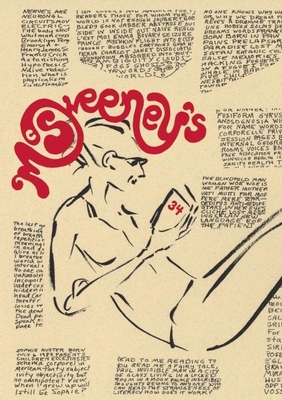
McSweeney's 34

There's nothing better than a good collection of short stories, and the 34th issue of McSweeney's definitely delivers.  This 224-page book makes up half of this edition; the other half is a long journalistic piece that I'm going to read next.  In this book there are a number of different pieces of short fiction, one example of oral history, and a collection of self-portrait sketches.

My favourite piece in this book is a story called "Twenty Questions" by a first-time author named Bridget Clerkin.  It's a delightfully twisted little tale that seems, on the surface, to be about a woman remembering how difficult her mother was during her childhood, while her and her boyfriend play 20 Questions with a child.  The flashback scenes contain the random strangeness of the best of David Sedaris's work, and the end of the story, with its revelation about the game that gives it its title, is unexpected and chilling.  This is one of the best short stories I've read in ages.

I also quite enjoyed "The Wreck of the Beverley B.", an excerpt from T. Coraghessan Boyle's new novel.  This story, which has a pretty self-explanatory title, reminded me of how much I enjoy Boyle's work.  It's been years since I read one of his novels, and I should make a point of doing that soon.

Among the other stories I found memorable were Lawrence-Minh Bùi Davis's "Like the Locked Antlers", a story about the Vietnamese-American press and their coverage of Hurricane Katrina; Anthony Doerr's "Afterworld", an interesting tale about memory and the Jewish experience in the Second World War; and Mona Awad's "Your Biggest Fan", about a wannabe rock star and the girl he could always count on for a good evening.

I also enjoyed "Letters From the Academy" by Tom Barbash, an epistolary tale concerning an obsessive tennis coach and his young charge; and Sean Casey's "Conversations With Girls", which is a very bizarre, likely allegorical story, although I'm sure I missed the point, lost as I was among the nine to fifteen feet tall girls with strange limbs and appendages.

The self-portraits did little for me, but the inclusion of Tafi's account of incarceration and torture at the hands of Robert Mugabe's police in Zimbabwe was haunting.

Strangely, I think my favourite part of this book is the letters at the beginning from a variety of authors or 'friends of McSweeney's'.  These letters are frequently funny, such as the one that intends to explain red wine to an ignorant audience ("Some famous people who famously drank red wine include Val Kilmer"), or another that recounts the story of a young man discovering his strange uncle in a compromising position with the family's Thanksgiving turkey late one night.

This is a great, eclectic collection of contemporary writing, and I think I'm going to have to become a regular reader.

Saturday, September 25, 2010

Fables #98

Written by Bill Willingham
Art by Mark Buckingham, Steve Leialoha, and Dan Green

Now that Rose Red is back on the job, it feels like the good old days in Fables, as she exerts her authority over the Farm by threatening Geppetto's bodyguards, joining Stinky's cult of personality, and effectively side-lining the traditional Fabletown leadership.

A good portion of this comic is taken up with a variety of one-on-one interview Rose has with the different citizens of the Farm, as they bitch, moan, complain, and occasionally come up with a good idea or two.  These scenes are very well-written, and at times quite funny.

I am enjoying this build-up to the coming conflict with the Dark Man, and especially like that Willingham is leaving us out in the rain with Old King Cole and the Beast, instead of making us privy to these plans.  I imagine this book is going to be pretty good through issue one hundred, although I do question how much life it has left in it past that.

Skullkickers #1

Written by Jim Zubkavich
Art by Chris Stevens and Edwin Huang

As I'm sure you're aware, this title has received a ton of positive press in the last two weeks, and has had Bleeding Cool reporting that copies were selling for five times cover price on Ebay the day before the book even hit the stands.  There seems to be a huge speculative interest in new creator-owned Image books of late (Chew being the gold standard, but books like Morning Glories are good examples).  I don't understand this type of thinking, but I like that it is helping 'the little guys' get some readers.

I'd already decided to buy this comic before all the media storm started, because the manager at my comic store is friends with Zubkavich, and the store was doing a lot to promote the book.  I missed the launch party, but when I picked up my books this week, Zubkavich was standing their signing them.  I'm always willing to pick up a new comic if it supports local creators, and I've learned to trust the Beguiling's staff and their recommendations.

It's not the type of comic I would have picked up otherwise.  It has a little too much of a 'classic Image' look for me, and the first couple of pages did nothing for me.  But then, I slowly found myself being drawn more and more into the story, and by the time I finished reading it, I was pretty sure I'd pick up issue 2.

Skull Kickers is about a pair of mercenaries.  One is a large bald human, who seems very strong and packs a chunky pistol.  The other is a red-bearded dwarf, who seems a little touchy.  Together, they've been killing werewolves in some medieval-looking town, and the local lieutenant refuses to pay them.  Their negotiations become interrupted when a young chancellor arrives in town, only to be promptly assassinated.  Our as-yet nameless heroes go after the killer, but fail.  Later, they are hired to steal his body.

The art is split between Stevens and Huang, and I found that I liked Huang's pages better.  The style reminds me of Udon Studios's work, which make sense as Zubkavich has done work for them.  This is a fun comic, and is worth a look.

DC: The New Frontier

by Darwyn Cooke

I was surprised it's taken me this long to get around to reading this comic, and have found it to be a real treat.  Basically, Cooke writes an almost total reboot of the DC Universe, set between the end of the Second World War and the early 60s.  It's the time when the new heroes of the Silver Age begin to emerge, and it respects and honors as canon the work of the Golden Age.

The story begins with the last mission of The Losers (the Kirby version, not the Vertigo crew), as they end up on the Island That Time Forgot, searching for Rick Flagg.  From there, the story mostly follows Hal Jordan as he flies missions in Korea, and later becomes a test pilot for Ferris Airlines.  We also follow J'onn J'onnz as he becomes a Gotham police detective and sometimes partner to Slam Bradley.  As the books progress, we check in with a number of different heroes, although little is seen of the Golden Age crowd, with the exceptions of Superman (who is working for the government), Wonder Woman (who is fired by the government after expressing her opinions), and Batman (who is operating in Gotham against federal law).

The storyline seems very scattershot and random for the first of the two volumes, but in the second book, it begins to pull itself together as we learn of the type of threat that the Island that Time Forgot (now called the Centre) poses to life.  The various heroes, government agencies, and science-based militias (Challengers of the Unknown, Sea Devils, etc.) have to work together to defeat it, and perhaps usher in a new age of heroism.

I like the consistent approach Cooke takes to these characters.  He works hard to have them, and the people around them, react believably to the fantastic things they are or are seeing.  I also like that he integrates so many corners of the DCU in a way that could never have happened when they were first being published.

The art in this book is, of course, amazing.  What I like most about Cooke's work is the way he pays so much attention to architectural detail.  While I'm sure many are attracted to his shiny rockets and experimental jet planes, what I love the most is the air traffic control tower at Ferris.  It's the way he draws people's offices and high-tech bases that make this such a wonderful comic to me.  He employs the same aesthetic sense he used in his Parker comic, and it makes the book very satisfying. 

What really makes this project work is the way he taps into the reader's nostalgia and love for a certain era of comics history, but also manages to tell a contemporary and compelling tale.  This is some great stuff.

Friday, September 24, 2010

The Walking Dead #77

Written by Robert Kirkman
Art by Charlie Adlard and Cliff Rathburn

It's predictable to say this, but this is another amazing issue of The Walking Dead.  There are some really amazing scenes in this issue:
- Carl finds Rick talking on his Lori telephone, and their relationship splinters a little bit more.
- Glen and Maggie have a heart-to-heart.
- Andrea goes on a date (sort of).
- Pete (the guy that Rick beat up recently) decides to kill him, and interrupts a discussion about a funeral, which leads to a few more funerals being necessary in a scene that is going to lead to a lot of different problems for the community in the issues ahead.

The last couple of pages are chilling, as Adlard finally gets to draw some zombies again.  I especially like the change that comes over Douglas after events in this issue.  Kirkman seems determined to test his character's morals, now that the lower levels of Maslow's Hierarchy of Needs have been met by moving into the community.

Elephantmen #27

Written by Richard Starkings
Art by Axel Medellin

It's been a couple of months since we last saw Elephantmen, and I found I wasn't terribly interested in reading this comic.  I started it twice before I finally read it through, which is not something that happens to me often.  I'm surprised by this reaction too, as I like this comic.

I think the problem is that this current arc, "Questionable Things" is very plot-driven, and Starkings has come at the story from a strange angle (which he does a lot, but that's usually what I like about the book).  There's a Mappo sleeper cell planning on doing some Elephantmen-based terrorism, but I'm not sure that their motives or methods are all that clear.

Hip, Ebony, and that strange Blackthorne chick are going after the Mappo base, so they release a bunch of reactivated crocodile Elephantmen into a cattle factory.  Maybe it's a strategically important cattle factory, I'm not sure.

Meanwhile, Sahara continues her walkabout and hangs out with the giraffe tailor guy.  Not much more happens.

I like Axel Medellin's art on this book.  It would seem he's going to be the regular artist for the next little while, so it's good that I do enjoy his work.  I hope he can help put the book back on schedule.  Also, the new "Charley Loves Robots" back-up starts here, by Szymanowicz, Roshell, and Bautista, and it's pretty cute.

Monday, September 20, 2010

Crogan's Vengeance

by Chris Schweizer

Despite having read a number of positive reviews for this book (and the subsequent entry in the series), I resisted reading this for a while because at first glance, Schweizer is the type of cartoonist whose art I don't usually find myself attracted to.

Having read this now, I can safely say this has become yet another example of how I don't always have very good instincts when it comes to picking my comics, because this book is very cool.  The story is all about 'Catfoot' Crogan, a sailor who becomes a pirate when the vessel he's sailing on, under the command of an unfair and cruel captain, is taken over by pirates. 

Catfoot has three talents.  He's fleet-footed, strategically gifted, and morally correct.  Some of these talents land him in hot water with his fellow pirates, such as Mr. D'Or, a massive and cruel man with great ambition.

This story is a lot of fun to read, as Schweizer keeps the pace moving quickly, and his art, which seems overly thick and crowded by his gigantic letters, grew on me.  This is the first in a series which is going to check in with Catfoot's various descendants, who, according to the family tree included in this book, have had a variety of interesting professions, almost all of which have involved weaponry.  Recommended.

Sunday, September 19, 2010

Madlib Medicine Show No. 7 - High Jazz

by Madlib

With this entry in the on-going Madlib Medicine Show, the Loop Digga gives us fifteen tracks of high-minded and beautiful jazz.  As with most of his jazz projects, the work here is attributed to no less than eleven different bands or groups of artists, although I'm quite certain that most of these people are fictional, and that Madlib has done the whole thing himself.

It does become easy to question that assumption though, as the liner notes are full of pictures of the different records that these tracks were taken off of, and there is much to suggest that all these people exist.

Not that it matters though, because we're here for the music.  This cd is full of lovely, effervescent jazz.  It's easily my favourite of Madlib's jazz albums (competing with Sujinho, the Jackson Conti collabo), as it doesn't have much that is 'challenging' or hard to listen to.  That is not to say that it's an "easy-listening" jazz album, it just doesn't ever hurt.

Of note on here is 'Funky Butt, Part 1', which is a collaboration with James Poyser and Karriem Riggins, two artists who are always working the underside of hip-hop, and never receive much recognition.  This is probably the most consistent of the Medicine Show projects released so far.

III

by The Budos Band

As I find myself listening to more and more funk bands, there is one thing that becomes abundantly clear:  they kind of all sound the same.

I'm sure that such a statement would send the hardcore fans into a tizzy, but to my unschooled and mostly ignorant ear, it's a very true statement.  This stuff all sounds the same to me, but I like it anyway. 

The Budos Band are made up of some twelve musicians, and with this, their third album, they demonstrate skill, swing, and funk.  This album has eleven tracks, but is just under thirty-nine minutes long.  With each track, the listener dives in quickly, and is swept up for a short while in their groove.  The album is solely instrumental, so there is not much to write about, other than to say this is a fun, cool piece of work.

Saturday, September 18, 2010

The Unwritten #17

Written by Mike Carey
Art by Peter Gross and Ryan Kelly

I'm sure that a lot is going to get written about this issue of The Unwritten, as Carey has borrowed a page from the old 'Choose Your Own Adventure' comics, and presented 'The Many Lives of Lizzie Hexam' as a labyrinthine example of that much-maligned and often horrible genre of children's book.

Lizzie Hexam is a supporting member of the Unwritten cast, and she is either a living character from a Dickens novel, or is a real person who believes that's who she is.  This comic clears up the mystery, but it depends entirely on which storyline you choose to follow, as Carey presents both as viable options, and links them together so that the main plot elements of this comic - Tom and Savoy bringing her out of her coma and escaping the hospital with her - take place no matter which path you choose.

And in that way, the illusion of choice in the story is really just a gimmick, but an interesting one nonetheless.  To tell this story, Carey increased the page count and had the book drawn in a landscape orientation, effectively splitting each sideways page into two, so that there can be more options and paths to follow.  However, most of the story progresses linearly, with the only option presented to the reader to be to 'Turn to Page X'.

Regardless, this is an interesting issue of The Unwritten, although I don't think it will do too much to retain any new readers that the format attracts.  The story is just too confusing at this point to draw anyone new in.  Also, I don't think this will look too good once it's collected in trade - the sideways orientation never works.

THB: Comics From Mars #2

by Paul Pope

I've never read any of Pope's THB comics, mostly because I was sleeping on him when he started the series (I'm sorry to say it), and because they've never been collected.

When my comic store secured a stack of these, which were released with little fanfare at the Baltimore comic convention the other week, I figured it was time to dive in to this series.

Of course, so far as I can tell, this comic, which contains seven short stories, has nothing to do with the main THB series, or if it does, it doesn't matter.

This is a very cool collection of comics, although many of the stories are very ephemeral. In some cases, like the 'tone poem' that makes up the fourth entry in the book, that somehow ties in to the work he has done for DKNY.  It's very pretty, but I'm not sure I get it.

Other stories are more straight forward.  There's a funny tale of a cartoon mouse and cat, and the film director who is frustrated that their careers have moved them beyond the ability to make good mouse and cat movies.  There's a story about a young boy who's interested in David Bowie, and a superhero-like story about El Pollo Diablo the Chicken Devil.

It's nice to see some new work from Pope, and I hope to see more soon.  It's probably going to be hard to find this comic, but it can be ordered from the Adhouse website.  It's worth it.  (While you're there, get a copy of Johnny Hiro - the best comic they've ever published).