Saturday, January 15, 2011

Outlaw Territory Vol. 1

Edited by Michael Woods

Now here's an example of a trade paperback that appeared without making any ripples.  This Western anthology book went pretty much unnoticed when it was published in 2009 - I don't remember seeing any reviews or promotion for it, although I do remember seeing it in Previews.  I know that there is a second volume due to be released soon, but know very little about it as well.

As someone who loves a good anthology, I was happy to settle down with this book, which contains a good thirty short stories by a ton of different writers and artists.  Most of the stories are very good, but the limited range of the Western did make many of them blend together in my mind.

Frequently the stories involved gunslingers looking for revenge, and it did become a little monotonous at times.  Still, the quality of work in this book is pretty high.  Creators whose work stood out included Moritat, Joe Kelly and Max Fiumara, Khoi Pham, Joshua Hale Fialkov, Greg Pak and Ian Kim, Christopher Mitten, and mpMann (such a treat to see his work again).  Some artists who were new to me, but who made an impression include Yeray Gil Hernandez, Christopher Provencher, Simon Fraser, and Chad Sell.

I felt like many of the stories needed more room to spread themselves out, but in all, I was pleased with this book.  Some contributor bios would have been a nice addition though...

The Infinite Vacation #1

Written by Nick Spencer
Art by Christian Ward

Nick Spencer, the current writerly Golden Boy of comics, is just about everywhere.  This week alone he has two books out (this and THUNDER Agents), one next week (Morning Glories), and his War Machine book, Iron Man 2.0, is set to start soon as well.  His has become one of those names to watch for 2011, and this new title is a good example of why.

I'm not sure I've read many comics like The Infinite Vacation.  To begin with, it seems he's come up with a genuinely new twist on a classic comic book idea.  The characters of this comic (almost all of whom are Mark), are able to travel through alternate realities through an app on their smartphones.  They purchase (at great expense), the ability to swap places with their alternate reality doubles, flitting from one life to another as a way of rectifying simple mistakes or wrong turns in their life.  The girl in the coffee shop leaves before you work up the nerve to talk to her?  Move on to a different life, where she stays a bit longer.

It's a difficult concept to get across, and the fumetti-style infomercial sequence does little to clarify the rules.  Mark has himself for a therapist, and is also his own customer-service rep at the company that runs things.  The problem is, a lot of his alternates seem to be dying these days, and that has him uncomfortable.  So, we get a bit of a mystery, and also realize that not everyone lives like this.  There are a small group of Deadenders - alternate reality Luddites - who oppose this style of living.  Most of this issue is spent in establishing some of the rules of this existence, and the story is intriguing enough to guarantee I'll be back.

Spencer is aided in this book by Christian Ward, who is a remarkable artist.  I loved his work on Olympus a little while back, and have been looking forward to a new series from him.  His impressionistic style reminds me of Eric Nguyen around the start of Strange Girl, and I love the risks he takes with layout in this issue.  I look forward to seeing where this book is going to go.
Thursday, January 13, 2011

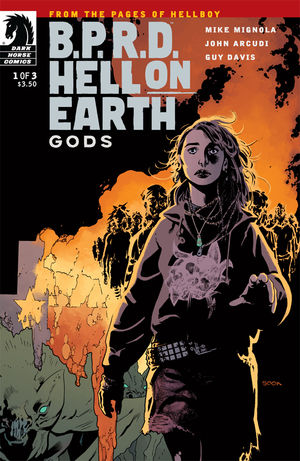
BPRD Hell on Earth - Gods #1

Written by Mike Mignola and John Arcudi
Art by Guy Davis

There is a lot about this new BPRD Hell on Earth mini that makes it different from the last few.  First, it's the second arc since the book's title was amended to include the 'Hell on Earth' tag, and the first three-issue mini-series I can think of (the comic is usually split into five-issue arcs).

Most importantly, this is the first time I can think of where almost the entire comic has nothing to do with the agents and members of the Bureau for Paranormal Research and Defense.  One of them shows up on the last page, but that's it.

Instead, this issue is focused on a teenage girl named Fenix, her boyfriend Jorge, and a ragtag group that are following them across Texas.  It seems that Fenix has some form or precognitive or psychic powers, and she has led her crew away from the different creatures and forms of weirdness that have been roaming across the country since the War of the Frogs ended.

This issue is the first that really takes the time to examine the extent of the damage and changes to the status quo since this title was revised.  Davis does a great job with these new characters, and the Dennis Calero cover is pretty nice.  This would be a decent place for someone to sample this title, if you've been thinking about trying it out.

Sunday, January 9, 2011

Authenticity

by The Foreign Exchange

There is no need to listen to any kind of pop music other than The Foreign Exchange.  They construct these perfect little songs, which are on one hand completely effervescent and forgettable, and on the other all the more wonderful for that same reason.

I've been listening to Authenticity, their third album, for some months now, and could not, off the top of my head, name a single song, but at the same time, when it's on, I find myself singing along quite easily, which was how I found myself reacting to their last album as well.

It's interesting that the two men at the core of this project, Little Brother's Phonte Coleman and producer Nicolay, are best known for their contributions to the world of hip-hop, because they come across as having such delicate sensibilities here.

The eleven tracks on this album mostly have Phonte singing; he only raps on a couple of occasions.  Nicolay is joined by Zo! on a couple of tracks, and Phonte is backed by Chantae Cann and Yahzarah, who actually finishes the album with a mostly solo track, 'This City Ain't The Same Without You', which is my favourite of the album.

I highly recommend checking this out if you are looking for some lovely, light-hearted music.

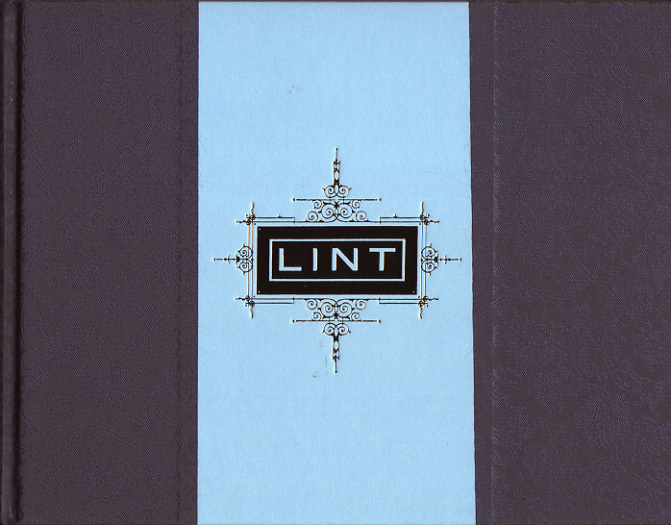
The Acme Novelty Library Vol. 20: Lint

by Chris Ware

It's pretty easy to understand why this latest entry in Ware's Acme Novelty series would end up on so many reviewers' "Best of 2010" lists, as it's an absolutely brilliant piece of work, but it's also a brutally sad read.

Lint tells the story of Jordan (Jason) Lint, from his birth to his death, in one page installments.  Jordan's mom died when he was young.  He was a pain in the ass at school.  He didn't get along with his dad.  He cheated on girlfriends and wives.  He failed at entering the music industry.  He got involved in some shady business practices at his father's company.  He cheated some more.  He got old.  With almost every new chapter, we start to think of this guy as more and more of a creep, but I found myself also hoping that he might finally turn himself around and become a nicer person.

What makes the book so interesting is the way in which Ware keeps surprising us in the selectivity of what he chooses to reveal.  We think that we are seeing Lint's whole story, but then something happens to make us realize that while we've seen some of his most intimate moments, we have no idea what this guy is capable of.  The scene where he starts to read from his son's memoir where it describes an incident when his son was small was a shock.

As usual with a piece of Ware's work, the page design in this book is stunning.  He has an ability to break pages into sections that, while they defy the usual flow and format of a comics page, are intuitively easy to follow.  I love the dissonance he sets up in this book, caused by portraying a person who is spiritually bereft and ugly with such beautiful art and design.  This is an amazing piece of work - go read it.

Friday, January 7, 2011

The Question Vol. 6: Peacemaker

Written by Dennis O'Neil
Art by Denys Cowan, Malcolm Jones III, and Carlos Garzon

It's funny how memory can sometimes play such tricks on a person.  I have fond memories of picking up some random issues of Dennis O'Neil's run on The Question from the late 80s, although I never had anything like a complete set of the run. I got interested in the character after the series had closed, although I remember a quarterly title, with the same creative team.  When I saw this volume, which holds the last six issues of the run, on sale for only $2, I thought it would be cool to see how the comic held up.

It hasn't held up at all.  Fine, the clothing and hair styles are really dated.  There are a bunch of mullets, pleated skirts, and shoulder pads stinking up Denys Cowan's otherwise fine artwork, but that's not the problem.  The problem, surprisingly, is that O'Neil's writing is ham-fisted, clichéd, and embarrassing.  Reading this, I wonder how any fans could have been upset that Renee Montoya took over the mantle of this character.

The concept is sound - that The Question patrols Hub City, the most perfect example of urban decay and blight this side of Warren Ellis's Snowtown, and ten times worse than Detroit (not an urban farm to be found).  The problem is that Hub City is ridiculous.  If you park your car for five minutes on a main street, a gang of thugs will just randomly attack it.  People walk around with dead babies hoping to con you into lending them a dollar for milk.  Corrupt judges hire gigantic black men named Cathy to kill the mayor, and then lend them their car to drive to City Hall in.  I don't even think those are the worse examples.

And then there's the mayor.  I remembered Myra Fermin as a tough, dedicated, hands-on mayor, but the number of times that she gets kidnapped or chased after by killers is insane.  I really don't know what was going on with this book, or why DC has just recently reprinted the whole series.  It's probably best left forgotten...

Sag Harbor

by Colson Whitehead

About two years ago I read an excerpt from this book in the New Yorker, and enjoyed it a lot.  I'd already read and enjoyed two of Whitehead's novels, and one book of essays, and had a high opinion of the author, but this book was different.

The Intuitionist was an interesting story about the philosophical methods and beliefs of elevator repairmen that showed a lot of promise.  John Henry Days was a great novel, which explored the John Henry figure, and told a pretty fascinating story.  But this New Yorker story was different - it had an innocence and charm to it that the other books lacked.  I was immediately interested in reading it, but of course it took me a couple of years before I actually read the book.

Sag Harbor feels very auto-biographical, and the comments in the acknowledgments make it clear that a lot of this book is based on Whitehead's life.  The book starts Benji (now Ben), a middle-class African American private school student from New York, who, every summer of his life, stays in Sag Harbor with his brother, and on week-ends, his parents.  The novel is basically a teenage coming-of-age book set in the mid-80s, and it's pretty funny and charming.

Benji and his group of friends get up to the usual kind of ruckus, drinking, working minimum wage jobs, fighting with BB guns, trying to meet girls, and so on.  Benji feels different from all his friends though; he's introspective and more than a little clueless, and carries a fair number of anxieties around with him.

Whitehead puts a lot of care into crafting his lost slice of idyllic summers, as he chronicles a way of life that is forever lost.  There are a number of memorable characters (Benji's domineering, argumentative, barbecue-obsessed father being a good example), and hundreds of references to the 80s.

I found the book frequently funny (I loved the part where Benji questions why so many white people, especially teachers, feel the need to touch black hair) and an enjoyable read.  Recommended.

Thursday, January 6, 2011

Sweet Tooth #17

by Jeff Lemire

With this issue, Lemire wraps up the third book of Sweet Tooth, and a lot happens.  In the last issue, Jeppard attacked the militia camp where Gus was held captive, and he brought an army that worships the hybrid children with him.  This issue opens with him fighting with Abbot, the leader of the militia, who claims to have his child still in his care.

There is a lot of fighting, as the different characters come together to escape, although not everyone makes it out.  Jeppard is faced with some very difficulty knowledge concerning his child, and also finds that Gus is not as happy to see him as he expected.

With the end of this arc, this comic is heading off into a slightly different direction again.  I like that Jeppard and Gus are going to be traveling together, but I especially like the way Lemire has introduced a sense of distance and distrust between them.  This continues to be an excellent series.

Who is Jake Ellis? #1

Written by Nathan Edmondson
Art by Tonci Zonjic

This new mini-series has me pretty excited.  It opens in Barcelona, where a man named Jon is involved in some kind of deal that has gone badly.  He fires on the people he's supposed to be dealing with, and jumps off a yacht.  The scene is weird, because the dialogue seems really stilted and unnatural.

Then, we see the same scene again, except that there is a shadowy figure standing in the background, who is speaking directly to Jon.  Now, the dialogue makes perfect sense, but we don't know who this guy is.  But then, that's the point of the comic, as the shadowy guy is Jake Ellis, and comic is called Who is Jake Ellis?

As the issue unfolds, we follow Jon to France, where he is hiding out from the Spaniards, and discussing his options with Jake.  It quickly becomes clear that no one else can see Jake, but he can see a lot.  While Jon is having a liaison with a French waitress, Jake warns him that there are people coming to kill him, and guides him out of the room.

The book establishes itself nicely, while playing things very close to the vest.  There's talk of some Americans that are looking for Jon, but we can't tell yet if he's a good guy or a bad guy.  And, of course, we have no idea what the deal is with Jake, but I want to find out.

As interesting as the story is, this comic is worth buying for Tonci Zonjic's art alone.  His look is a mix of David Aja, Year One-era David Mazzuchelli, Michael Lark, and maybe a bit of Javier Pulido.  It's very nice, and while I know I've seen him do something for Marvel, I'm sure it won't be long before he becomes a higher profile artist there.  This is definitely worth checking out.

iZombie #9

Written by Chris Roberson
Art by Michael Allred

This issue of I, Zombie felt a lot shorter than the other ones, and it can't simply be because DC is now publishing 20, instead of 22 page books.  How much can two pages affect a story?  I didn't expect to notice a difference.

I think the problem is more that nothing really gets resolved in this issue.  Spot plays a role playing game with his friends, who are somewhat suspicious of him lately, but nothing comes of it.  Diogenes has a flashback, and is followed by two vampires, but nothing comes of it.  Gwen and Horatio play mini-golf until Gwen is overcome by a vision, but it doesn't lead to much (although it might later...).  Ellie wants a body, but (I'm sure you get the idea).  The same thing holds for the scene with Professor Galatea, Amon, and a hooded guy who buys something off Galatea's new 'assistant'.

I'm sure, as part of a trade, this chapter will read just fine, but on it's own, it seemed a little light weight.  Also, as much as I like Allred's art, I didn't like the way he drew Spot in this issue - he looked different from usual.  It's all good though - this is a very good comic, and with the number of characters and sub-plots that Roberson's juggling, we're bound to run across the odd comic that gets stretched too thin.

Wednesday, January 5, 2011

The Walking Dead #80

Written by Robert Kirkman
Art by Charlie Adlard and Cliff Rathburn

And now, eighty issues after the comic started, Robert Kirkman brings us to the place that many zombie movies live and die in.  After the events of the last few issues, as gunfire has ripped around the perimeter of the Community, a herd of walkers has now surrounded every living member of the cast (except for Andrea).  The walls of the Community are surrounded by hundreds of walkers, and Rick and the crew have to figure out what to do.

It reminds me of the characters trapped in shopping malls in zombie films.  The concerns shift to supplies and guarding the perimeter.  Except, this is The Walking Dead, so it's handled so much better than we're used to.

Rick is basically exerting his semi-official leadership, organizing patrols, watchmen, and engineering squads to keep the members of the Community safe while they try to think of ways to clear out the herd.  It's interesting how the people who live in this place hold Rick and his group separate - they practically lionize them as being more capable, which is interesting, as nothing in this comic is ever guaranteed.

While all this is going on, we also see a lot of interesting interactions between characters.  Rick is sought out by the woman he rescued from an abusive husband, while Abraham seems to have something going on with the woman he rescued a while back.  Also, Morgan and Michonne are getting closer, although she's also started talking to her sword again...

I love this comic, and the way in which it has stayed fresh over such a long run.  I'm excited about this arc, as it is easy to believe that the wall may not hold, and Rick will be on the run again, although I hope not.

Sweets #4

by Kody Chamberlain

I'd started to worry when I'd see this book, although it's worth the wait.  Chamberlain has given us an interesting police procedural, and I've been curious to see where it was all going.

As the last issue ended, our two detectives were in a car accident with their chief suspect in the Sweets murders.  Now, the surviving cop learns that there may be a connection between this murderer and his own dead daughter, who had died in a car accident.  Of  course, he goes a little nuts, and heads off to find the killer himself.

What keeps this comic from being just another run of the mill cop comic is the way Chamberlain has played with the reader.  First, there are the strange flashback sequences that supposedly let us know why the killer is the way he is.  Next, there's the neatness of the whole thing - the Detective knows that life doesn't wrap up the way this case seems to be, and is suspicious.

One complaint I have is that for a story supposedly taking place immediately before Hurrican Katrina is supposed to hit New Orleans, there is surprisingly little reference to the storm.  I would have assumed that by this point, despite the fact that no one knew how bad the storm would be, that it would be a frequent topic of conversation.  It's not mentioned in this comic at all.  I do look forward to seeing how Chamberlain is going to wrap all of this up, and I hope it's satisfying.

Girls Vol.4: Extinction

by The Luna Brothers

Girls is easily the best work the Luna Brothers have done.  While I really enjoyed Sword, this series, and this volume in particular, is amazing.

This title was pretty strange from the start.  A naked woman appears in a small town, has sex with a local loser, and almost immediately begins laying eggs.  Within a few hours, these eggs have hatched more identical women, who alternately hunt and kill the local women, or try to copulate with the local men.  Oh, there's also a large glowing sperm in a cornfield that eats the dead women of the town, and an impermeable force field surrounding the whole town.  The residents of Pennystown and its environs have to try to work together to survive.

And that's where things get really interesting, because these people are all nursing grudges and dislikes for one another.  As this volume opens, all the hate and animosity has spilled over, as a full-on war of the sexes has erupted.  The women have rid themselves of the men, led by the castrating (figuratively and literally) Nancy, who is a character like few others I've read in comics.  The men seem to be succumbing to their weaknesses all over the place, and Ethan, the more or less main character and sexual partner to the original 'girl' is now going all Baltar on Battlestar Galactica on us, and is having visions of the girl.
This series is incredibly suspenseful and hard to put down.  The art and plotting are just about perfect, and I loved the way that the Lunas fit in so many important character moments and touching scenes amid all the madness.  This is a great comic.

Sunday, January 2, 2011

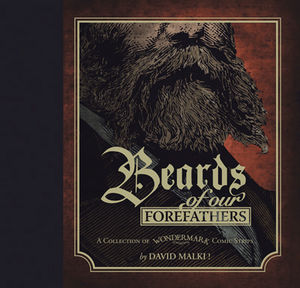
Wondermark Vol.1: Beards of Our Forefathers

by David Malki

I first came across David Malki's bizarre collage comics in a volume of Myspace Dark Horse Presents, and then tracked down his website.

Malki builds his webcomics in the classic newspaper strip format of between one and five horizontal panels, but he doesn't draw them.  Instead, he cuts out figures and images from 'old-timey' publications, populating his strips with men in top hats and women in multi-layered, ruffled dresses.  They drive old fashioned cars, and everything has a very Victorian look to it.

However, the dialogue and context of the strips is very modern, and this where much of the humour lies.  Malki does a great job of playing with peoples' expectations, and subverting the reactions we are conditioned to have to these types of images.  This book collects a number of his strips, and one longer-form comic.  Each strip has his alt-text included below it, which is often the location of the punchline.  The comics are mostly funny, although Malki's sense of humour sometimes goes too far into the surreal for my liking.  I recommend checking out the site, and getting a feel for his work before grabbing one of the books.

Saturday, January 1, 2011

Fauna

by Jneiro Jarel

Jarel's been on my radar for a while, through his pseudonymous work as Dr. Who Dat and The Shape of Broad Minds, as well as through the odd production credit on some hip-hop albums.  Fauna is the first album I've bought where the credit is given to him alone, and it's a nice little album.

If I were to describe this simply, I would say that Jarel is the Brazilian Flying Lotus.  He works in the same mindscape of tripped out and abstract beats, but there is more of a South American warmth and feel to this.

The album opens with a discussion of the threat to the Brazilian rain forest, although there is not necessarily an ecological theme to the entire disk.  The second track, 'Castaju Cajunea' has a bit of a Deep Forest vibe, as indigenous singing gets a lush electronic backdrop.  The majority of these twelve tracks are instrumental, although 'Wave Trip' has vocals sung in Portuguese.  This is a lovely album.