 Edited by Dave Eggers
Nothing beats a solid issue of McSweeney's. There's always such a good mix of fiction, non-fiction, and poetry, and I've yet to come across a boring issue.
This issue first caught my eye because of a poem by Roberto Bolano, my current favourite writer. 'The Neochileans' is nice, but I think I agree with the critics who prefer Bolano's prose to his poetry.
Julie Hecht provides a memoir about Marimekko dresses, and Elmore Leonard gives us a short story featuring one of his more popular characters, Karen Sisco. I've never read Leonard before, but this makes me want to.
Perhaps my favourite piece in this issue is a non-fiction article by Jennie Erin Smith called Benjamin Bucks, about a man who made a name for himself by smuggling reptiles out of Africa. Smith gets close to Bucks and his circle, including a colourful older Pakistani man known as Captain, and reports on their shady dealings, all of which would make an incredible movie.
I also found myself getting very swept up in Tom Barbash's article about Bobby Armao, the man who became the protector and agent of the Shah of Iran following his exile. This is a very well-researched and balanced piece that provides a detailed look into a story I was previously completely ignorant about.
Vaclav Havel was always one of my favourite world leaders (mostly for stories about his ditching his security detail so he could have a little fun), but his article 'Politics and Conscience' was a little too dry for me.
EC Osundo's story 'Bumsters' is a fun little tale about a vacationing middle aged woman who falls for a young man in Gambia. The story reminded me very much of Dany Laferriere's Heading South (perhaps the movie more than the book). Yannick Murphy's 'Secret Language' is a strong story about an inter-racial marriage gone wrong.
'Anything Helps', by Jess Walter, is about a homeless man's efforts to stay sober, which become all the harder once he's kicked out of the 'Jesus Beds'. This story is touching, especially when he goes to see his son at his foster home. Benjamin Weissman writes an equally touching story in 'Louella Tarantula', which is narrated by a young man whose mother is dying from cancer, and whose only relief comes from having a pet tarantula lie on her face.
'Giant of the Sea', by Abi Maxwell, is a difficult story about two young women who are basically kidnapped in late 19th Century Sweden to be brought to New York and put to work. Maxwell writes this story very well,but it is a harsh one.
The book ends with 'Carlos the Impossible', JTK Belle's mildly magical realist story about a gigantic bull, and the bullfighter that is unable to defeat him over a period of some twenty years.

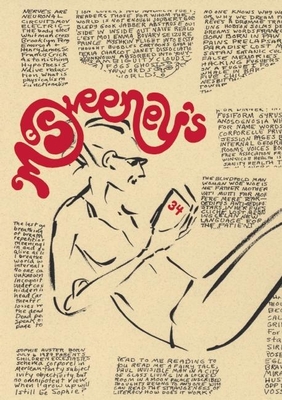
 definitely delivers. This 224-page book makes up half of this edition; the other half is a long journalistic piece that I'm going to read next. In this book there are a number of different pieces of short fiction, one example of oral history, and a collection of self-portrait sketches.
